Even as we rolled out SpellingCity, teachers and literacy coaches asked us to do more with helping students with sounds. They asked us to convert the games to focus not just on spelling practice but on practice activities for recognizing and working with sounds. They wanted help not just with the spelling of words but with learning phonics and building phonological skills. So we focused on building the tools needed for games to help students with the sounds and the letter combinations that represent them. The goal was to give students audio visual practice with the sounds that create words helping them connect the sounds that they hear and the letter combinations that they see. 
We spoke to a lot of people which confirmed our initial findings. This mapping did not exist. Dictionaries, for instance, routinely have a phonetic spelling of words using various systems for writing phonics. But none of the dictionaries mapped the sounds back to the actual spelling of the words. Nobody had ever done this. Our vision came from watching endless tutors, teachers, and parents help students by pointing at a few letters in a word and having the student say the sounds that those letters created. We watched teachers help students read the sounds to decode the word and then blend them together to write them.
https://drive.google.com/file/d/1eSTVqHDPNEbzxZ5HTvCaIAfMhv9bVGWS/view?usp=sharing

What is Phoneme to Grapheme Mapping? Phonemes are the basic sounds of the English language. Examples of phonemes from the word “cheek”, would be: CH, EE, K.
Graphemes are the use of letters to express these sounds. In English, here are three example of patterns of how sounds (phonemes) are expressed by letters (graphemes):
- Some sounds are created by a single letter which almost always makes the exact same sound. For example, the T is “ten”. T almost always sounds the same (except when it’s in a combination with another letter like H).
- Some sounds such as the long E sound can be spelled a number of ways including a "ee", or "ea", or an E followed by a consonant followed by an E at the end of a word, a y at the end of the word, and an "ey" at the end of the word.
- Some letters, like the S, can make different sounds. S usually sounds one way, like in sound, and sometimes sounds quite different, like in sugar (where it makes the SH sound)
Students can hear and see the sounds by mousing over the sounds in each box of VocabularySpellingCity’s Interactive Phonics Boxes. Many classrooms have students first work on recognizing the initial sounds where the Sounds Boxes are used with images to match initial sounds. For commercial purposes, the patent belongs to VocabularySpellingCity. Patent 10,387,543 Holders of Patent 10,387,543 (current employees) The patent holders who are current VocabularySpellingCity employees are John Edelson, Obiora Obinyeluaku. and Kris Craig. The two xemployees are Jose Perez-Diaz and Harold Milenkovic.

Activities with Interactive Sound Boxes (that use this technology): Sound It Out, Initial Sound Speller, Final Sound Speller, FlashCards, Word Study (available for logged-in students) and TeachMe More.


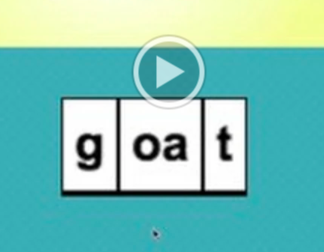
Click to Hear the SoundsStudy and TeachMe More.
References:
No comments:
Post a Comment