I've been using blogs and bloggers for promotional purposes for half a decade. About four years ago, I adopted a disclosure policy and a year after that, I started urging our collaborators to disclose any relationships. I think its a good healthy trend. I'd like the government to mostly stay out of it and I'd like an educated readership to expect and insist on it from writers they follow.
In case you don't know, I run and founded Time4Learning.
I just read a great review, with a clear disclosure on it which made me smile. Its a Time4Learning review. And I quote:
As I've said before, homeschooling has not come to me as naturally as I'd anticipated.
I had visions of very structured mornings - first we'd do our daily devotions, followed by quiet playing for Brooklyn and Simeon while Lincoln read and practiced his handwriting and I taught Judah how to read. Then we would seamlessly transition into handwriting practice for Judah while I went over math lessons with Lincoln. In the meantime the younger kids would be done playing with blocks and would quietly begin putting together Lego castles....(continued)
I won't spoil the surprise but as you can imagine, homeschool days don't really run like that...Surprise!!!
Thursday, December 02, 2010


Sunday, October 31, 2010
Saturday, October 30, 2010
Link Building - Hit on your vendors!
One simple way that I can think of to build links is to hit on all my vendors.
If you've done some graphics work for me, before I've even paid your bill, I have sent you an email with a quote endorsing your work and suggested that you post it on your website. And, I've included the link back to me that I want.
My graphics people feel that I'm being helpful to them by providing them credibility to help with their marketing. And I'm getting links.
If you've done some graphics work for me, before I've even paid your bill, I have sent you an email with a quote endorsing your work and suggested that you post it on your website. And, I've included the link back to me that I want.
My graphics people feel that I'm being helpful to them by providing them credibility to help with their marketing. And I'm getting links.
To like or share, to tweet or to follow?
I've put together a reasonable social media strategy across my range of sites. I'm now interested in optimizing it.
In places where I put up Facebook icons, I've had to decide whether to ask them to:
- like our facebook account
- like our web page
- share it to their Facebook account
On Twitter, I have to choose between an icon that:
- tweets a suggested message
- follows our tweets
Does anyone have any insight or methodology or case studies on how to compare the benefits or optimize at this level?
In places where I put up Facebook icons, I've had to decide whether to ask them to:
- like our facebook account
- like our web page
- share it to their Facebook account
On Twitter, I have to choose between an icon that:
- tweets a suggested message
- follows our tweets
Does anyone have any insight or methodology or case studies on how to compare the benefits or optimize at this level?
Friday, October 29, 2010
Private domain registrations hurt email deliverability
I read (on The Institute on Social Internet Policy website) but I'm not sure that I believe that:
...one of the first things many email delivery and anti-spam specialists will do when presented with a “is this spam?” situation, is do a WHOIS lookup on the domain - either the sending domain, or the domain being advertised as a link in the email.
And guess what happens if that WHOIS returns nothing but “this domain is privately registered”, with no way to really determine who is behind the domain - with nobody willing to take responsiblity for the domain - nobody saying “if there is a problem, the buck stops here”?
You look like someone with something to hide.
And if you have something to hide - or even look like you have something to hide - your email isn’t going to get delivered. After all, if you aren’t willing to put your name to your business, then why should you expect an ISP to deliver the email from that business.
They won’t, and you shouldn’t.
Private domain registrations. A bad idea for legitimate email sending businesses.
What do you think?
...one of the first things many email delivery and anti-spam specialists will do when presented with a “is this spam?” situation, is do a WHOIS lookup on the domain - either the sending domain, or the domain being advertised as a link in the email.
And guess what happens if that WHOIS returns nothing but “this domain is privately registered”, with no way to really determine who is behind the domain - with nobody willing to take responsiblity for the domain - nobody saying “if there is a problem, the buck stops here”?
You look like someone with something to hide.
And if you have something to hide - or even look like you have something to hide - your email isn’t going to get delivered. After all, if you aren’t willing to put your name to your business, then why should you expect an ISP to deliver the email from that business.
They won’t, and you shouldn’t.
Private domain registrations. A bad idea for legitimate email sending businesses.
What do you think?
Thursday, October 28, 2010
A Book Worth Reading
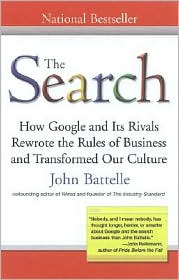 I've been told and so I'm making a note of it that this is worth reading:
The Search: How Google and Its Rivals Rewrote the Rules of Business and Transformed Our Culture
by John Battelle
I'll sample it on my Ipad and see if its worth it.
Sunday, October 17, 2010
I know Bob! His business advice is good.

 I just got this email (paraphrased and edited) from Bob Reiss. I met him maybe a decade ago when he gave a talk at a local HBS business group about how he had taken advantage of the Trivial Pursuit craze long ago. It was great stuff.
I've just posted my first two You Tube videos with the hope it'll help a Small Business audience. Check it out!
Monday, August 23, 2010
Blogs, links, and canonical URLs
If on different articles on a blog, we include links to the same page, is this a total waste of time?
I think of it like this:
If the canonical URL for each article is the name of the article, then each article is a different page. So the additional links might be a little worthwhile.
If the canonical URL for articles is either by tag, month, or the front page, then many of these articles on the same topic are a waste of time.
How does blogger and wordpress treat this? Is it a setting that we have control over?
Matt Cutts, I just watched your video on canonical URLS, you didn't mention how blogs fit into this....
I think of it like this:
If the canonical URL for each article is the name of the article, then each article is a different page. So the additional links might be a little worthwhile.
If the canonical URL for articles is either by tag, month, or the front page, then many of these articles on the same topic are a waste of time.
How does blogger and wordpress treat this? Is it a setting that we have control over?
Matt Cutts, I just watched your video on canonical URLS, you didn't mention how blogs fit into this....
Friday, August 06, 2010
Education: Learning to Write Links that Count!
Learning to blog has been a fantastic educational experience for me. As a modern form of literature or writing, the blog is a popular media and motivating topic for students learning to write. Public self expression is a very motivating writing prompt that has kicked many students into caring about what they say. Reluctant writers are not born—they’re made. Instead of assuming your child doesn’t like to write, try a little motivation in the form of a good writing prompt. An interesting question that is much discussed is whether writers can be made or not. My answer is that anyone can be taught the mechanics of good writing. It starts with a language rich environment no later than the preschool educational years. The preschool curriculum should primarily be a life style, it's too early for formal education but still, you should make an effort to speak with real sentences and rich vocabulary. Books should be a constant companion.
The preschool years are educationally the most important years of children’s lives. Research demonstrates that in the first three years of life, participating in a lively language-rich environment with plenty of adult interaction and attention are vital to building foundation skills. From ages three to five, the stimulation should start to include some activities focused on building specific skills in language, math and fine muscle control. These are the primary areas where an online preschool program can contribute to children’s development.
The homeschool community is beginning to think more about literature in terms of how they are portrayed. The first directory of homeschool literature has now appeared on the web.
-----------------
This post builds on the materials convered in link mechanics.
The above is an example of a very nice SEO effort.
The preschool years are educationally the most important years of children’s lives. Research demonstrates that in the first three years of life, participating in a lively language-rich environment with plenty of adult interaction and attention are vital to building foundation skills. From ages three to five, the stimulation should start to include some activities focused on building specific skills in language, math and fine muscle control. These are the primary areas where an online preschool program can contribute to children’s development.
The homeschool community is beginning to think more about literature in terms of how they are portrayed. The first directory of homeschool literature has now appeared on the web.
-----------------
This post builds on the materials convered in link mechanics.
- Each link is to a different website. This avoids the decreasing value of each link. When placing ads or writing articles, avoid wasting links by multiple links to the same website. If you must link several times to the same website:
- Put the most important link first
- link to different pages each time.
- The paragraph includes many keyphrases important to the sites that are linked to. Even the page title (article title) works in terms such as education, learning, and to write which build the perceived relevance of this post to the target sites.
- Deep linking. A number of the posts link to content deep in the site. The anchor text is relevant to the targetted page.
- Try to quote a bit from the page that you are targetting. This saves a lot of writing time and it appears to be a more natural citation.
- Title tags could be added to each of these links.
- Efficiency, speed, and effectiveness are important. This lesson both teaches and, at the same time, I squeeze a little juice out of it. This is the standard of effectiveness that we strive towards. Getting the most impact for the least effort.
Tuesday, July 06, 2010
How many and which social media icons?
Here's a collection of what others are doing:


V7N.com/ forum - Notice that their share list is kept to a small list. The obscure ones are left hidden behind the More button. This way, real users, can find the icons they want without getting discouraged.
T4L Plan - The top level list is good. Arguably, it should also have FB-like but maybe that would interrupt the flow of someone across the site. The More (plus) button takes users to an unrefined list which needs to be refined. The next step in design is to review what it tweets or shares as a message. Is it the same for every page? Does it take the page title? How does it work?


Squidoo.com- Notice that there is both a fb share and friend.

V7N.com/ forum - Notice that their share list is kept to a small list. The obscure ones are left hidden behind the More button. This way, real users, can find the icons they want without getting discouraged.
T4L Plan - The top level list is good. Arguably, it should also have FB-like but maybe that would interrupt the flow of someone across the site. The More (plus) button takes users to an unrefined list which needs to be refined. The next step in design is to review what it tweets or shares as a message. Is it the same for every page? Does it take the page title? How does it work?


Sunday, June 27, 2010
To like or to share, that is the question!
y big question, can you have a combined facebook/bookmark and facebook/like icon? Are they distinct? As I researched this question, I found this row of icons on a forum....
{Grrr. it's not cutnpasting...take a look:}
http://www.v7n.com/forums/social-network-marketing/196383-facebook-like-vs-bookmark.html#post1425406
Background. Like many, I have littered my sites with little icons or widgets such as the following:


 del.icio.us
But, my other sites have other icons related to bookmarking such as:


Another site has a single icon which has everything in like this:

Some others focus on RSS subscriptions:
 Subscribe in a reader
Or, we ask you to subscribe as either an email or RSS reader:


You can write your own code or, if you google "facebook twitter icons", you'll get oodles of sites that will provide you icons and generate your code for you. I wonder if their code will on Facebook, both create a link and an icon.
Widgetbox will give you icons and generate the code.
{Grrr. it's not cutnpasting...take a look:}
http://www.v7n.com/forums/social-network-marketing/196383-facebook-like-vs-bookmark.html#post1425406
Background. Like many, I have littered my sites with little icons or widgets such as the following:
del.icio.usBut, my other sites have other icons related to bookmarking such as:
Another site has a single icon which has everything in like this:
Some others focus on RSS subscriptions:
Subscribe in a readerOr, we ask you to subscribe as either an email or RSS reader:
In addition to bookmarking and subscribing, you can friend (now like/facebook) or follow (twitter) or visit (facebook).
You can write your own code or, if you google "facebook twitter icons", you'll get oodles of sites that will provide you icons and generate your code for you. I wonder if their code will on Facebook, both create a link and an icon.
Widgetbox will give you icons and generate the code.
Monday, June 21, 2010
Link Mechanics
Here's a quick summary of the link quality portion of an internal seminar that we had on SEO.
1. If I put two links from one page to another page, does the second link help at all? NO. NOT AT ALL! The second anchor text and link are totally ignored.
2. Are links from images or links from text more valuable from a SEO perspective? Text links are preferable.
3. Are text links within the body content more valuable then links elsewhere on the page? Links from within the body of a paragraph are considered more likely to be organic references and hence, count more.
4. How many links per paragraph is considered too many? A very rough rule of thumb is that one link per hundred words is optimal.
5. Is a sidebar link superior to a content link? This is really a repeat of question 3 above. In content links are considered the best.
6. Is it better to use a shotgun or a rifle? Of course, what I mean, is it better to target a page by using the exact same anchor text over and over again or to vary it slightly? Slight variations are more natural. So if you are targetting "delicious hot dogs", you might try variations such as "hot dogs","hot delicious dogs","tasty hot dogs","delicious dogs","delicious sausages","yummy frankfurthers". The idea is for it to be natural, not highly organized. I'm betting that Google will start figuring out synonyms soon (ie latent semantics in the jargon of search).
7. Are run of site links valuable? It's hard to tell, they certainly aren't very valuable. On one hand, Google might consider them to be bought and worthless like so many footers. Or, like so many blogs, they might be considered truly natural endorsements.
8. How important is the relevance of one site to another, of one page to another, in terms of the value of the link. VERY Valuable. If you are on a site called homeschool freaks and you link to another page using homeschool freaks as the anchor text and that page is titled homeschool freaks,Google takes that endorsement very seriously.
9. How much more important is a good site from a great site, a PR of 6 over a PR of 3? This is a great mystery but I would guess that each PR (all else being equal) is one order of magnitude more important than the previous level. So, ten links from sites with NO page rank equal the value of a PR of 1. A link from a PR of 5 is ten times more valuable than a link from a PR of 4. Note that I say; "all else being equal" which means relevance, number of outgoing links etc. Also note that I have not seen anybody else even attempt to quantify this which means that they are all wimps.
10. Does a site's organization matter in terms of link quality? Yes, Google likes content sites organized into content areas that it understands. This is a confusing and ambiguous area. Is Google looking at internal link structure or to folders? One one hand, I hear that they discount pages that are far from the root directory by every folder so I try to keep everything close to the root. On the other hand, this simplistic rule makes no sense to me so I don't want to take it too seriously.
11. How can you tell how credible a site is to Google? Easy, search a bunch of relevant terms and see how high in the search engines it is?
12. Is there a simpler way to see how credible a site is? Maybe, try using a link counter and then evaluate the quality and relevance of the links. Also, check out how old it is. And see if the links come from .govs or .edus which probably count more. There are tools for this.
13. Do title tags on text links and alt tags on image links help? What about adding a title tag on an image link? All the tags help, the title tag on the image is a little extreme but maybe worthwhile.
14. What's the best links to focus on? This is really a rehash of much of the above especially the rifle vs shotgun and run of site vs natural questions. The best thing is to have a natural looking mix of links which grow steadily. Growing by 10% in a day or a week is, for established sites, an upward limit. More is weird an merits being looked at. Just keep tryign to get more links of many different types on an ongoing basis focusing on mixing it up and mixing it up. This is the natural pattern of the messy world and shows that the links are natural. LOL!
Tools
majesticseo
yahoo website explorer
Google's wonder wheel
seomoz.org
raven-seo-tools.com
Terms
Trust
edgerank
title tag
alt tag
halo link
1. If I put two links from one page to another page, does the second link help at all? NO. NOT AT ALL! The second anchor text and link are totally ignored.
2. Are links from images or links from text more valuable from a SEO perspective? Text links are preferable.
3. Are text links within the body content more valuable then links elsewhere on the page? Links from within the body of a paragraph are considered more likely to be organic references and hence, count more.
4. How many links per paragraph is considered too many? A very rough rule of thumb is that one link per hundred words is optimal.
5. Is a sidebar link superior to a content link? This is really a repeat of question 3 above. In content links are considered the best.
6. Is it better to use a shotgun or a rifle? Of course, what I mean, is it better to target a page by using the exact same anchor text over and over again or to vary it slightly? Slight variations are more natural. So if you are targetting "delicious hot dogs", you might try variations such as "hot dogs","hot delicious dogs","tasty hot dogs","delicious dogs","delicious sausages","yummy frankfurthers". The idea is for it to be natural, not highly organized. I'm betting that Google will start figuring out synonyms soon (ie latent semantics in the jargon of search).
7. Are run of site links valuable? It's hard to tell, they certainly aren't very valuable. On one hand, Google might consider them to be bought and worthless like so many footers. Or, like so many blogs, they might be considered truly natural endorsements.
8. How important is the relevance of one site to another, of one page to another, in terms of the value of the link. VERY Valuable. If you are on a site called homeschool freaks and you link to another page using homeschool freaks as the anchor text and that page is titled homeschool freaks,Google takes that endorsement very seriously.
9. How much more important is a good site from a great site, a PR of 6 over a PR of 3? This is a great mystery but I would guess that each PR (all else being equal) is one order of magnitude more important than the previous level. So, ten links from sites with NO page rank equal the value of a PR of 1. A link from a PR of 5 is ten times more valuable than a link from a PR of 4. Note that I say; "all else being equal" which means relevance, number of outgoing links etc. Also note that I have not seen anybody else even attempt to quantify this which means that they are all wimps.
10. Does a site's organization matter in terms of link quality? Yes, Google likes content sites organized into content areas that it understands. This is a confusing and ambiguous area. Is Google looking at internal link structure or to folders? One one hand, I hear that they discount pages that are far from the root directory by every folder so I try to keep everything close to the root. On the other hand, this simplistic rule makes no sense to me so I don't want to take it too seriously.
11. How can you tell how credible a site is to Google? Easy, search a bunch of relevant terms and see how high in the search engines it is?
12. Is there a simpler way to see how credible a site is? Maybe, try using a link counter and then evaluate the quality and relevance of the links. Also, check out how old it is. And see if the links come from .govs or .edus which probably count more. There are tools for this.
13. Do title tags on text links and alt tags on image links help? What about adding a title tag on an image link? All the tags help, the title tag on the image is a little extreme but maybe worthwhile.
14. What's the best links to focus on? This is really a rehash of much of the above especially the rifle vs shotgun and run of site vs natural questions. The best thing is to have a natural looking mix of links which grow steadily. Growing by 10% in a day or a week is, for established sites, an upward limit. More is weird an merits being looked at. Just keep tryign to get more links of many different types on an ongoing basis focusing on mixing it up and mixing it up. This is the natural pattern of the messy world and shows that the links are natural. LOL!
Tools
majesticseo
yahoo website explorer
Google's wonder wheel
seomoz.org
raven-seo-tools.com
Terms
Trust
edgerank
title tag
alt tag
halo link
Saturday, May 22, 2010
Statistics and Online Marketing
This being my personal blog to ponder the mysteries of online marketing, I'll take it in a different direction. I am testing the market so if you have a reaction, would you please leave a comment? I wrote this email today which reminded me of a set of articles, book, or even online course that I'd like to create. It would be about online marketing and statistics. Here's the excerpt from the email...It was in response to one of my colleagues commenting that she's giving up on predicting what will work in terms of online marketing efforts.
Here's my experience,
Here's my experience,
I generally feel that for every three or four things that we try, one works.
Then we take the thing that works and try to improve on it or at least do a lot more of it.
And we study the ones that didn't and see what we can learn from them
Then of course, usually whatever worked the first time stops working.
The things that didn't work get tried again and work the second time.
Is it random? Maybe,
My personal theory if that the logic is in the numbers. We are usually working with small numbers so that the statistics are misleading. It's only when we have tens of thousands of examples that patterns become clearer but we're often trying to interpret results based on dozens or hundreds of examples. Which is too small.
BTW, if I ever get to do my own math curriculum, interpreting data and statistics will move from a peripheral issue to a mainstream one. It horrifies me how many people can take differentials (ie do calculus), calculate sines and cotangents (geometry 2), and solve differential and quadratic equations (algebra 1 & 2) but can't answer the basic questions of, "we need a 25% response rate for this effort to be cost-effective, we've sent out a hundred random emails. Ten people responded. Should we keep testing or is it decided?" (BTW, I too am not sure that I know how to answer it).
Wednesday, April 28, 2010
Canonical URL and Multisite Architectures
We had our wise and well-informed SEO guru in today and asked many questions about how to construct a few sites that we're planning with many thousands of overlapping pages. He answered our complex question with a single magic phrase. Canonical URLs.
I said huh and he answered with, but I'm not sure that it'll work for multisites. So I googled multisite canonical URLs and learned from the Official Google Webmaster Central Blog:
Ways of handling cross-domain content duplication
you can use the rel="canonical" link element across domains to specify the exact URL of whichever domain is preferred for indexing. While the rel="canonical" link element is seen as a hint and not an absolute directive, we do try to follow it where possible.
del.icio.us
I said huh and he answered with, but I'm not sure that it'll work for multisites. So I googled multisite canonical URLs and learned from the Official Google Webmaster Central Blog:
Ways of handling cross-domain content duplication
you can use the rel="canonical" link element across domains to specify the exact URL of whichever domain is preferred for indexing. While the rel="canonical" link element is seen as a hint and not an absolute directive, we do try to follow it where possible.
del.icio.us
Tuesday, April 27, 2010
Link Tools Roundup by Search Engine Land
Another Big Roundup of Link Tools
 by Debra Mastaler
One of my previous columns here on Link Week showcased a number of tools commonly used in link building. Since that post, a large number of new tools and services have come online, so I thought an update would be helpful. Not all of the sites listed will be traditional linking tools, I’ve also included a number of social media and general informational sites which can be used to find link partners.
Before we move on, the obligatory disclaimer. I have no financial involvement with any of these tools, they are presented as source options only. Some are free, others are not, always read their fine print.
This looks like a great list.It's from Search Engine Land. Thanks!
Standard link building tools
When you hear the term “link building tools”, the type of tools listed below are usually what comes to mind. Most of the tools here are anything but standard, they all come with multiple options (except Yahoo SE) and share one point of commonality… they list out backlink results.
Here’s a handful in alphabetical order:
•Analyze Backlinks
•BackLink Watch
•BuzzStream
•Link Diagnosis
•Light Insight
•Link Manager
•LinkScape
•Majestic SEO
•OpenSite Explorer
•Raven Tools
•SEOBook Tools
•SEO Spyglass
•BackLink Summary
•Who Links To Me
•Yahoo Site Explorer
•Yoast Link Analysis
Using backlink data to create a strategy and determine tactics is important when building links, so find a tool (or three) you’re comfortable with and start checking out who’s linking to whom. Most of the paid tools have free trial offers. Take note of the sites your competitors are linking to and any media mentions they’re getting. Start a database with the journalists you find and include them in future press release submissions.
Non-standard, outside of the box link tools
One of the biggest challenges in link building is finding quality sites to partner with. Competition for link real estate is keen, so be aware of opportunities popping up in your niche. Since you can’t spend 24/7 in research mode, having leads and opportunities sent to you goes a long way in securing good links. Here’s a handful of tools to help identify trends and uncover link potential.
Backtype is a “real-time conversational search engine” which indexes blogs and social media networks. While it’s helpful for finding hot trends/ideas to write about, the real link building juice lies in their Connect and Backtweet services.
Connect is an email alert service which monitors blog comments for keywords while Backtweets searches Twitter for URL’s. Both tools are great for finding sources/enthusiasts talking up your industry. Often, I find links in comments are better resources than those in the feature post! Go after those sources and find a way to secure them as a link partner.
Xmarks is a bookmark sync service with multiple options, but their Smarter Search feature is a great way to find pages being bookmarked in quantity. Why? People tend to bookmark sites with good content which means the source sites have potential to be good link partners. Find out what’s being bookmarked and work to get your link-filled content on those sites.
Over on the Spiced2 blog, there is a great article on How To Check To See If Your Email Has Been Blacklisted. If you send email link requests and aren’t seeing the response rates you’d like, this might be a good one to read.
Two Twitter tools we can’t live without are Twitter Feed, which adds your RSS to Twitter and Facebook automatically and Twilert which tracks specific keywords being used in tweets. When the alerts come back from Twilert, we use the information to look for potential host sites and for quality people to follow. Hopefully, they’ll follow in return which broadens the base of people seeing the links to our blogs and/or other web properties.
Widget marketing is all the rage and with good reason, it’s a great way to take a link campaign viral while building brand and driving traffic. If you’re not a programmer, no worries, sites like Widgetbox and the Widgipedia Forum are around to help. Spend some time there and on StickiWidgets looking at popular widgets and see if you can create something similar for your niche. Once your widget is done and launched, announce it’s creation via press release, to your customer base and on the forums you frequent.
Lastly, check out Dapper.net and Feed For All, both applications create RSS for static pages. Keep in mind you can create a feed for pages on your site as well as link embedded content you’ve placed on other sites. (Think article directories.) Submit the feeds you’ve created to the RSS directories as another way to drive link popularity.
Link building may be hard, but it’s not impossible if you consider the opportunities behind each of these tools. Look beyond the basics and find unique sites to host content and pull links from. Broaden your reach and the links will come.

One of my previous columns here on Link Week showcased a number of tools commonly used in link building. Since that post, a large number of new tools and services have come online, so I thought an update would be helpful. Not all of the sites listed will be traditional linking tools, I’ve also included a number of social media and general informational sites which can be used to find link partners.
Before we move on, the obligatory disclaimer. I have no financial involvement with any of these tools, they are presented as source options only. Some are free, others are not, always read their fine print.
This looks like a great list.It's from Search Engine Land. Thanks!
Standard link building tools
When you hear the term “link building tools”, the type of tools listed below are usually what comes to mind. Most of the tools here are anything but standard, they all come with multiple options (except Yahoo SE) and share one point of commonality… they list out backlink results.
Here’s a handful in alphabetical order:
•Analyze Backlinks
•BackLink Watch
•BuzzStream
•Link Diagnosis
•Light Insight
•Link Manager
•LinkScape
•Majestic SEO
•OpenSite Explorer
•Raven Tools
•SEOBook Tools
•SEO Spyglass
•BackLink Summary
•Who Links To Me
•Yahoo Site Explorer
•Yoast Link Analysis
Using backlink data to create a strategy and determine tactics is important when building links, so find a tool (or three) you’re comfortable with and start checking out who’s linking to whom. Most of the paid tools have free trial offers. Take note of the sites your competitors are linking to and any media mentions they’re getting. Start a database with the journalists you find and include them in future press release submissions.
Non-standard, outside of the box link tools
One of the biggest challenges in link building is finding quality sites to partner with. Competition for link real estate is keen, so be aware of opportunities popping up in your niche. Since you can’t spend 24/7 in research mode, having leads and opportunities sent to you goes a long way in securing good links. Here’s a handful of tools to help identify trends and uncover link potential.
Backtype is a “real-time conversational search engine” which indexes blogs and social media networks. While it’s helpful for finding hot trends/ideas to write about, the real link building juice lies in their Connect and Backtweet services.
Connect is an email alert service which monitors blog comments for keywords while Backtweets searches Twitter for URL’s. Both tools are great for finding sources/enthusiasts talking up your industry. Often, I find links in comments are better resources than those in the feature post! Go after those sources and find a way to secure them as a link partner.
Xmarks is a bookmark sync service with multiple options, but their Smarter Search feature is a great way to find pages being bookmarked in quantity. Why? People tend to bookmark sites with good content which means the source sites have potential to be good link partners. Find out what’s being bookmarked and work to get your link-filled content on those sites.
Over on the Spiced2 blog, there is a great article on How To Check To See If Your Email Has Been Blacklisted. If you send email link requests and aren’t seeing the response rates you’d like, this might be a good one to read.
Two Twitter tools we can’t live without are Twitter Feed, which adds your RSS to Twitter and Facebook automatically and Twilert which tracks specific keywords being used in tweets. When the alerts come back from Twilert, we use the information to look for potential host sites and for quality people to follow. Hopefully, they’ll follow in return which broadens the base of people seeing the links to our blogs and/or other web properties.
Widget marketing is all the rage and with good reason, it’s a great way to take a link campaign viral while building brand and driving traffic. If you’re not a programmer, no worries, sites like Widgetbox and the Widgipedia Forum are around to help. Spend some time there and on StickiWidgets looking at popular widgets and see if you can create something similar for your niche. Once your widget is done and launched, announce it’s creation via press release, to your customer base and on the forums you frequent.
Lastly, check out Dapper.net and Feed For All, both applications create RSS for static pages. Keep in mind you can create a feed for pages on your site as well as link embedded content you’ve placed on other sites. (Think article directories.) Submit the feeds you’ve created to the RSS directories as another way to drive link popularity.
Link building may be hard, but it’s not impossible if you consider the opportunities behind each of these tools. Look beyond the basics and find unique sites to host content and pull links from. Broaden your reach and the links will come.
Subscribe to:
Posts (Atom)